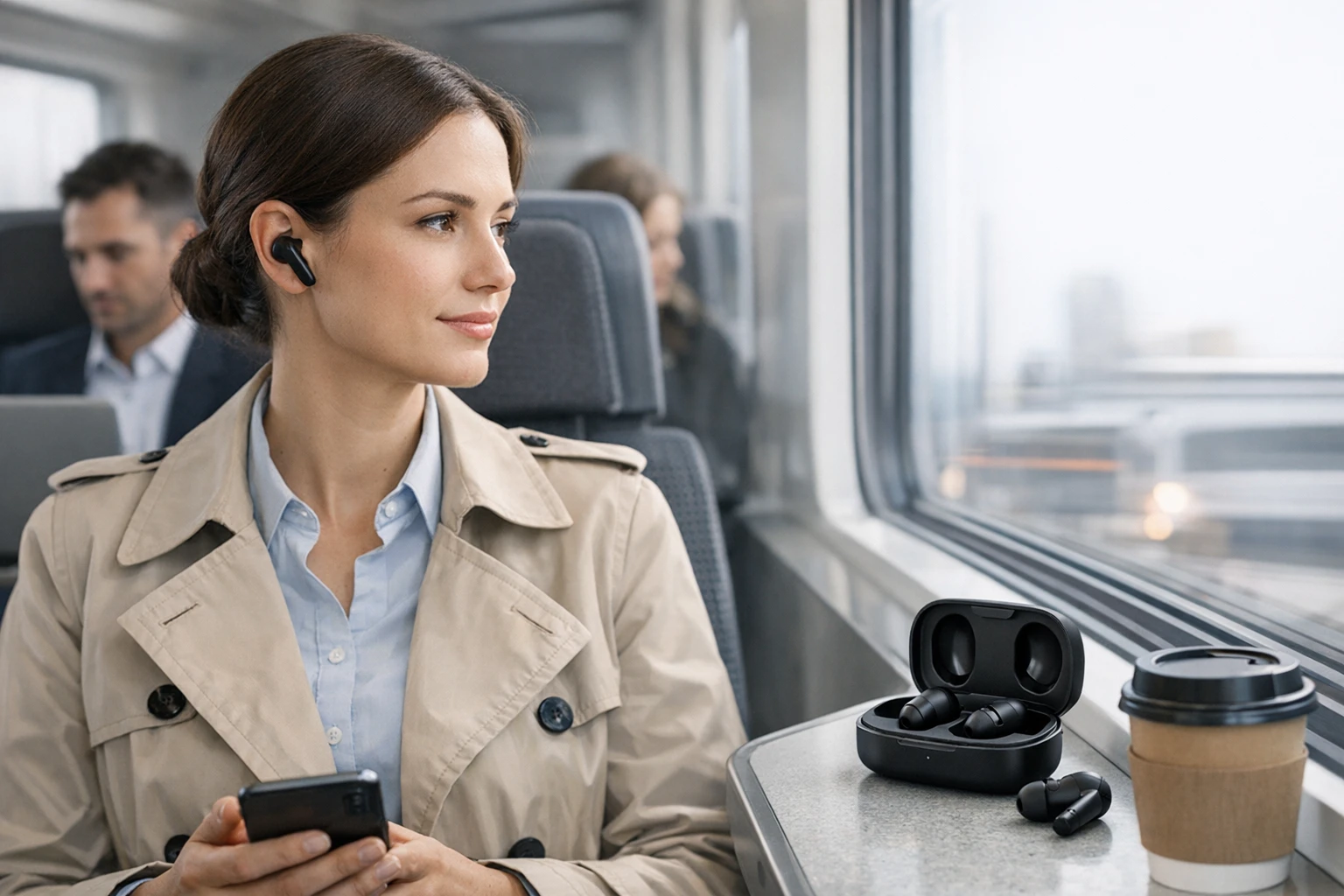
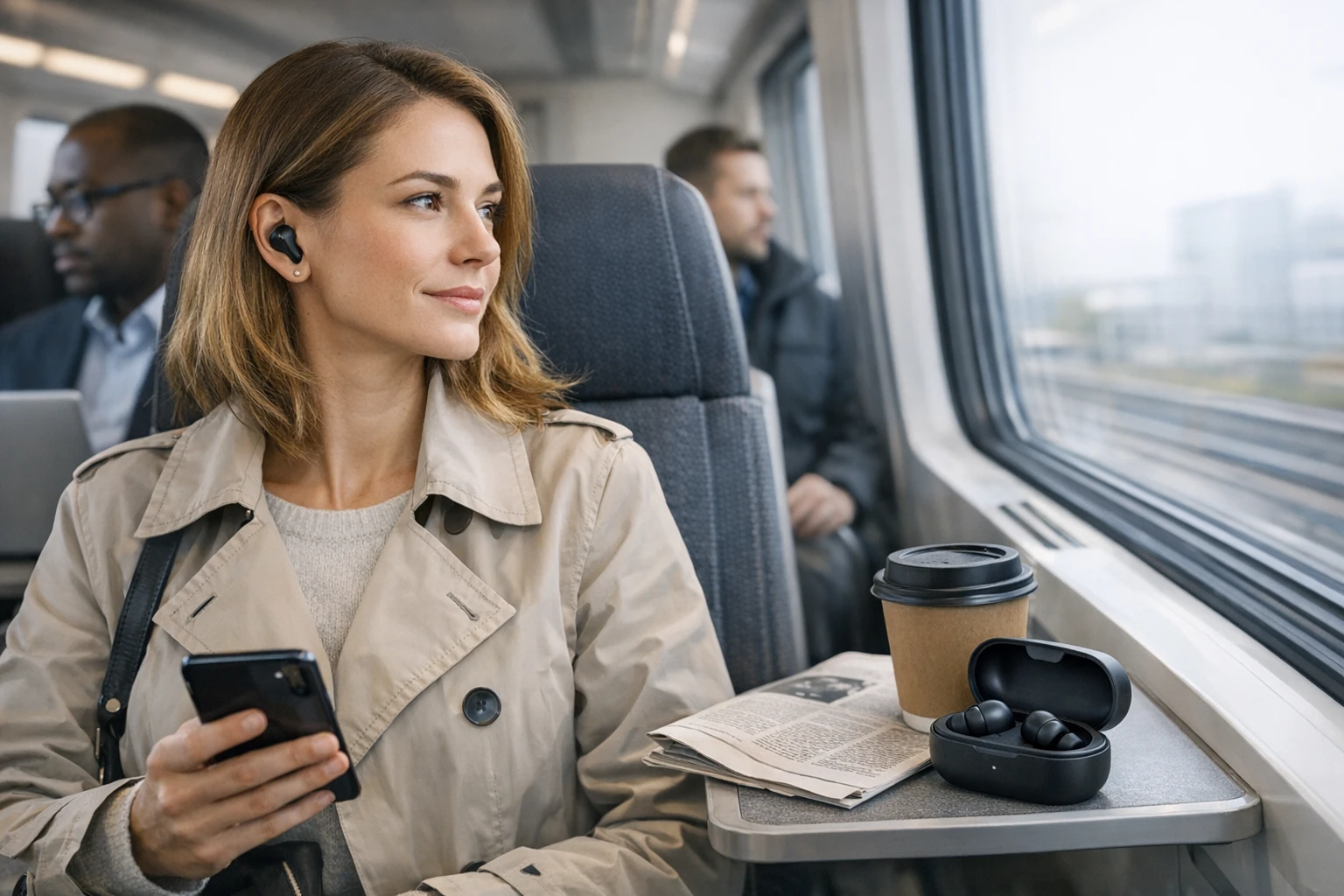
Are ANC Earbuds Safe for Daily Long Commutes? FAQ — Hearing Safety, Noise Levels & Practical Tips for Commuters
This FAQ addresses whether ANC earbuds are safe for daily long commutes and presents practical guidance for commuters who use active noise cancellation technology regularly.
The article combines hearing-health guidelines, noise-level calculations, device selection criteria, and commuter-focused usage strategies to help one make informed choices.
Quick Answer
Are ANC earbuds safe for daily long commutes in general depends on several factors including listening volume, commute noise level, fitting and seal, and device features such as transparency modes.
When used with conservative volume settings, intermittent breaks, and awareness of surrounding noise, ANC earbuds can substantially reduce exposure to harmful ambient noise and support safer listening on long commutes.
How Active Noise Cancellation (ANC) Works
Basic Principles of ANC
Active noise cancellation uses microphones to sample ambient sound and generates an inverse sound wave to reduce perceived noise at the ear canal.
This process targets low-frequency, steady noises such as engine rumble or subway vibrations and complements the physical sealing of in-ear tips.
Types of ANC and Interaction with Passive Isolation
Earbuds combine ANC with passive isolation created by ear tips that physically block ambient sound from entering the ear canal.
One should understand that ANC is most effective for continuous low-frequency noise, whereas passive isolation tends to be more effective for higher-frequency transient sounds.
Hearing Safety and Noise Exposure
Guidelines for Safe Listening Levels
Health organizations generally suggest limiting average exposure to 85 dB(A) over an eight-hour period to avoid noise-induced hearing loss.
Because earbuds deliver sound directly into the ear canal, small increases in output level produce large changes in perceived loudness and risk of hearing damage.
Understanding dB, Duration, and Risk
Every increase of 3 dB roughly doubles the acoustic energy, reducing the safe exposure time by half according to many occupational-exposure models.
For example, exposure to 85 dB for eight hours is comparable in risk to 88 dB for four hours or 91 dB for two hours.
Practical Example: Commute Noise vs Earbud Output
One commuter who rides a noisy subway with ambient levels around 80 to 85 dB would need moderate ANC and lower playback volume to keep combined exposure within safe limits.
If the earbuds reduce ambient noise by 20 dB, the earbuds may allow the listener to select lower playback volumes while still hearing content clearly, thereby decreasing overall risk.
Are ANC Earbuds Safe for Daily Long Commutes?
Benefits for Commuters
ANC earbuds can lower the need to raise volume to overcome ambient noise, which reduces the risk of noise-induced hearing damage during long commutes.
They also reduce fatigue from constant exposure to high ambient noise and can improve concentration and comfort on multi-hour journeys.
Potential Risks and Caveats
Risks arise when a commuter relies on high playback volumes despite ANC, uses earbuds for uninterrupted long periods, or uses poorly fitting tips that require increased volume to overcome poor seal.
Additionally, over-reliance on ANC in environments where situational awareness matters, such as busy streets or shared platforms, introduces safety hazards unrelated to hearing health.
Real-World Scenario: Two Commuters
Example one: A commuter named Emma uses high-quality ANC earbuds, keeps volume at about 60 percent, and takes a 10-minute break every hour. Her measured exposure remains within conservative safety margins over a two-hour daily commute.
Example two: A commuter named Raj uses ANC but sets volume very high to drown out noise on a three-hour commute without taking breaks. Raj experiences increased tinnitus and long-term risk due to elevated cumulative exposure.
How to Use ANC Earbuds Safely on Long Commutes
Step-by-Step Safe Listening Routine
- Measure ambient noise briefly with a sound-level app or estimation; note typical dB during commute segments.
- Enable ANC and choose a transparency or ambient mode when approaching platforms or intersections to maintain situational awareness.
- Start playback at a low volume and raise gradually only until speech or music is comfortably audible without straining.
- Follow a 60/60 rule where practical: listen at no more than 60 percent volume for no more than 60 minutes continuously, then take a break.
These steps encourage conservative exposure and preserve both hearing health and safety during commutes.
Using Transparency Modes and Ambient Awareness
Many earbuds include a transparency or ambient mode that mixes external sounds with audio playback to increase awareness of announcements and traffic.
One should use transparency mode when navigating busy platforms, crossing streets, or when the commuting route requires attention to environmental cues.
Monitoring and Adjusting Volume Settings
One practical approach is to set volume so that voices two meters away are just audible; if external speech is not audible without removing an earbud, the volume may be too high.
Some devices include volume-limiting settings or hearing-protection features that lock maximum output; commuters should consider enabling these to limit cumulative exposure.
Comparisons: ANC Earbuds Versus Alternatives
ANC Earbuds Versus Passive Noise-Isolating Earbuds
Passive noise-isolating earbuds rely solely on physical sealing to block ambient sound and perform well for higher-frequency noise but less effectively at low frequencies.
ANC earbuds add electronic cancellation for low-frequency sounds, permitting lower playback volume in many commuting scenarios, but they require power and may introduce processing artifacts.
ANC Earbuds Versus Over-Ear ANC Headphones
Over-ear ANC headphones typically provide stronger passive isolation and a larger ANC chamber, which may yield superior noise reduction for certain frequencies compared with earbuds.
However, over-ear models are bulkier and may be impractical for tight, crowded commutes where compact earbuds remain more convenient.
Pros and Cons List
Pros of ANC earbuds include improved low-frequency noise reduction, smaller size, and typically better compatibility with mobile use during commutes.
Cons include battery requirements, variable ANC quality across models, and potential reduction of situational awareness if transparency modes are not used appropriately.
Device Selection: Features That Improve Safety
Essential Features to Seek
- Reliable ANC performance with adaptive or multi-mode settings to match varying commute noise.
- Transparency or ambient modes to permit quick listening to announcements and environmental sounds.
- Good passive seal from multiple ear-tip sizes to avoid unnecessary volume increases due to leaks.
- Volume limiting or hearing-protection features built into device settings or companion apps.
Choosing models with clear ANC performance data and independent lab measurements helps reduce uncertainty about real-world effectiveness.
Examples and Real-World Application
A commuter who frequently rides a bus on rough roads will benefit from strong low-frequency ANC plus secure foam tips for passive sealing, reducing the need to increase volume.
A commuter who walks through city streets may prioritize transparency mode and robust fit over maximum low-frequency cancellation to maintain safety near traffic.
Maintenance and Practical Care
Fit, Seal, and Hygiene
Regularly check ear-tip condition because worn tips reduce passive isolation and may encourage higher volume settings to compensate for leakage.
CLean ear tips and earbud meshes per manufacturer recommendations to preserve sound quality and prevent infection from prolonged wear.
Battery, Firmware, and ANC Performance
ANC performance can change with firmware updates and battery level; keep firmware current and maintain charge to ensure consistent noise cancellation during long commutes.
One should periodically test ANC performance by listening to consistent ambient noise patterns and noting perceived reduction when ANC toggles are applied.
Common Myths and Frequently Asked Questions
Myth: ANC Means One Can Always Listen Louder Safely
ANC reduces ambient sound but does not make unlimited loud listening safe; increasing playback volume still increases risk of hearing damage.
It is important to couple ANC with conservative volume habits rather than using it as an excuse for louder listening.
Question: Do ANC Earbuds Cause Ear Pressure or Discomfort?
Some users perceive a sensation of pressure when ANC is active due to the way the ears interpret canceled low-frequency components, but this sensation is usually transient and not harmful.
If discomfort persists, one should lower ANC strength, switch to transparency mode, or consult a hearing professional for personalized advice.
Question: How Can One Estimate Cumulative Exposure on a Two-Hour Commute?
Estimate the ambient dB level of the commute, subtract the dB reduction from ANC plus passive isolation, and then note the playback dB level to compute cumulative exposure using standard exposure tables or apps.
As a practical rule, keeping playback below approximately 75 to 80 dB during multi-hour commutes typically preserves hearing safety for daily use, depending on exact duration and ambient conditions.
Case Study: Implementing a Safe Commute Routine
A transit authority employee instituted a three-step routine for daily commuters: measure ambient noise once, enable ANC and start at minimal comfortable volume, and set alarms for 50 to 60 minute listening intervals followed by short breaks.
Within four weeks, survey respondents reported less listening fatigue and fewer instances of elevated volume, indicating that structured listening habits can change long-term behavior effectively.
Summary and Takeaways
The central answer to are ANC earbuds safe for daily long commutes is conditional: they are safe when used with controlled volume levels, intermittent breaks, and appropriate situational awareness settings.
One should combine ANC features, proper fit, device selection, and conservative listening practices to minimize hearing risk and enhance commuter safety and comfort.
Conclusion
ANC earbuds offer meaningful benefits for commuters by reducing the need to raise playback volume to overcome ambient noise and by decreasing listening fatigue on lengthy journeys.
However, safety depends on how one uses the technology; careful volume management, use of transparency modes where appropriate, regular breaks, and informed device selection are essential steps to preserve hearing health during daily long commutes.