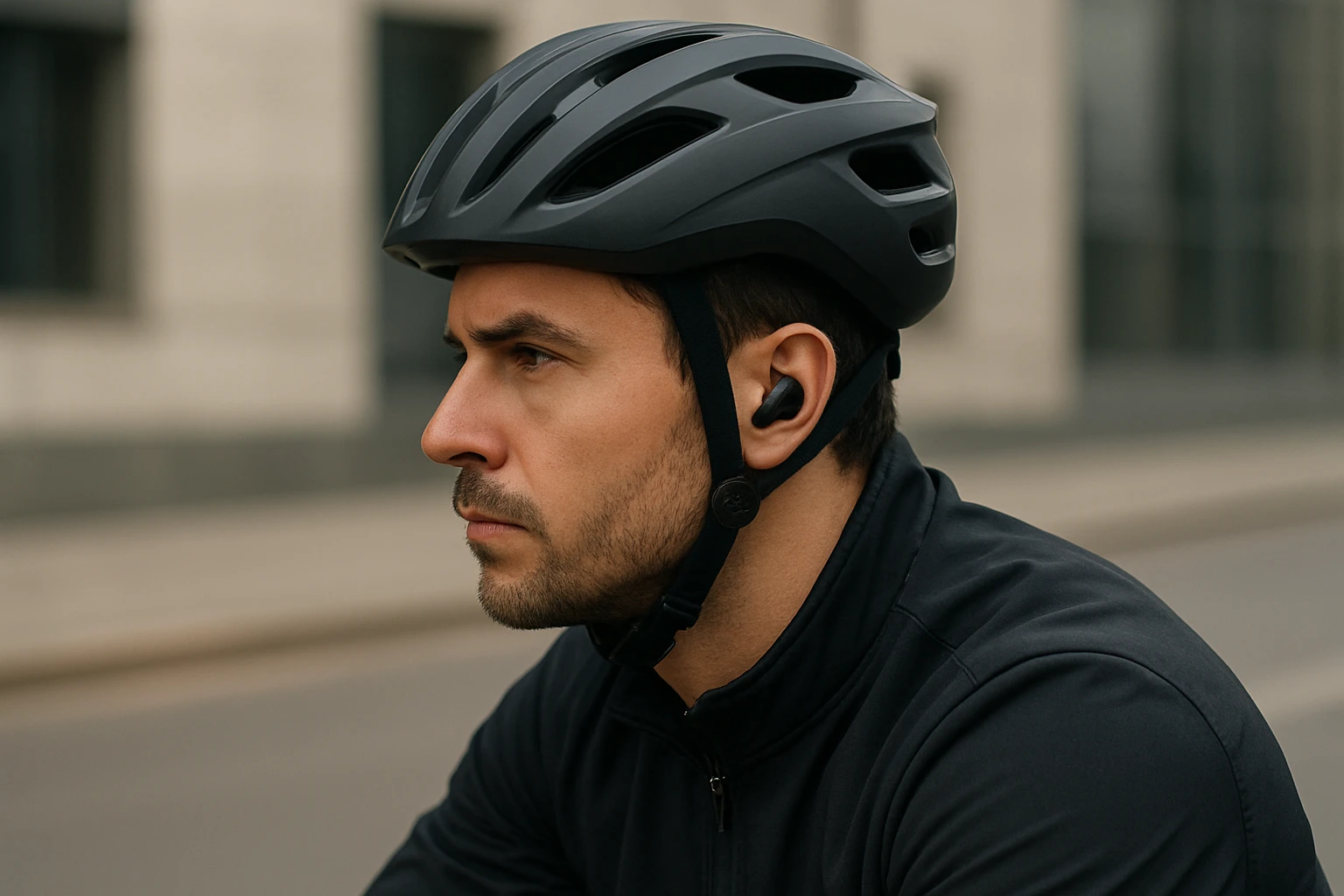
Introduction
Urban cyclists and commuters require audio accessories that enhance safety while delivering reliable performance. This guide explores essential features of earbuds that support situational awareness, durability, and sound quality. Readers will learn how to evaluate technical specifications, compare leading models, and apply best‑practice tips for everyday use. The focus remains on products that have proven track records on the Amazon marketplace.
Background and Context
Traditional in‑ear headphones isolate the listener from ambient sounds, which can increase risk when navigating traffic. Open‑ear and bone‑conduction technologies transmit audio without sealing the ear canal, allowing users to hear horns, sirens, and conversations. Advances in Bluetooth protocols, battery chemistry, and water‑resistant engineering have made such devices suitable for rigorous outdoor activities. Understanding these developments is crucial for selecting earbuds that balance entertainment with commuter safety.
Key Features for Safety‑First Earbuds
Open‑Ear Design for Situational Awareness
An open‑ear or bone‑conduction design keeps the ear canal unobstructed, enabling natural hearing of environmental cues. The DEMICEA Bone Conduction Earphones employ true OWS bone‑conduction, delivering audio through the cheekbone while preserving external sound perception. They weigh only 0.28 oz, featuring a titanium alloy frame that conforms to ear curves for extended comfort. Users report that the design remains secure during cycling and yoga sessions, making it a strong candidate for safety‑conscious commuters.
The SHOKZ OpenRun Sport Headphones also utilize bone‑conduction technology, offering a featherweight wraparound frame that leaves the ears completely open. With an IP67 rating, they resist sweat and light rain, ensuring reliable performance in unpredictable weather. Reviews highlight that the open‑ear fit allows riders to stay aware of traffic while enjoying clear music.
Battery Life and Fast Charging
Long battery endurance reduces the need for frequent recharging, a vital consideration for daily commuters. The DEMICEA model provides up to 60 hours of playback when paired with its charging case, and a five‑minute quick charge yields one hour of listening time. This rapid top‑up capability is advantageous for riders who may have brief stopovers during a commute.
The SHOKZ OpenRun delivers eight hours of continuous playback and supports a ten‑minute quick charge that adds 1.5 hours of use. Although its total runtime is lower than the DEMICEA offering, the fast‑charge feature compensates for short‑duration charging opportunities. Both products incorporate Bluetooth 5.3 or 5.0, minimizing connection latency and conserving power.
Water Resistance and Durability
Exposure to sweat, rain, and occasional splashes is inevitable for cyclists and urban travelers. The DEMICEA earphones carry an IP68 rating, indicating protection against dust ingress and prolonged submersion, complemented by a hydrophobic coating that prevents water buildup. This level of sealing exceeds the requirements of most commuter scenarios.
The SHOKZ OpenRun holds an IP67 rating, safeguarding against immersion up to one meter for thirty minutes, and includes a moisture‑detection alert for safe charging. Users appreciate the durability during intense workouts and rainy commutes, noting that the device continues to function without performance degradation.
Audio Quality and Bluetooth Performance
While safety remains paramount, audio fidelity should not be neglected. The DEMICEA earbuds support AAC and SBC codecs, delivering high‑definition sound with a 48 Mbit/s transfer rate and 60 ms latency. Reviewers commend the “HI‑FI” experience, describing it as clear and balanced across genres.
The SHOKZ OpenRun, though primarily focused on safety, provides respectable sound using bone‑conduction vibrations, delivering a natural listening experience without compromising environmental awareness. Its 8‑hour runtime is paired with stable Bluetooth connectivity, ensuring consistent playback during longer rides.
Additional Options: Traditional In‑Ear Models with Safety Features
For users who prefer a sealed fit, the Beats Studio Buds (White) and Beats Studio Buds (Black) offer active noise‑cancelling (ANC) and transparency modes. Transparency mode allows ambient sound to pass through, providing situational awareness while retaining the acoustic seal of in‑ear earbuds.
Both Beats models feature Class 1 Bluetooth for extended range, IPX4 resistance, and up to eight hours of playback plus a 24‑hour combined case capacity. Their physical buttons reduce accidental activation, a useful attribute for commuters who frequently adjust their devices while moving.
Comparison and Selection Guide
| Feature | DEMICEA Bone Conduction Earphones | SHOKZ OpenRun Sport Headphones | Beats Studio Buds (White) | bmani Wireless Earbuds |
|---|---|---|---|---|
| Design | True bone‑conduction OWS | Bone‑conduction wraparound | In‑ear with ANC/Transparency | In‑ear with ear‑hooks |
| Battery (Earbuds) | 60 h total (case) | 8 h | 8 h | 8 h |
| Quick Charge | 5 min → 1 h | 10 min → 1.5 h | Fast USB‑C (no exact time) | USB‑C, standard |
| Water Resistance | IP68 | IP67 | IPX4 | IPX4 (implied) |
| Bluetooth Version | 5.3 | 5.0 | 5.0 (Class 1) | 5.0 |
| Price (USD) | $79.99 | $89.94 | $94.99 | $24.68 |
| Average Rating | 4.3/5 (1,634 reviews) | 4.5/5 (37,448 reviews) | 4.1/5 (88,584 reviews) | 4.3/5 (52,191 reviews) |
Prospective buyers should prioritize open‑ear designs for maximum safety, especially in high‑traffic environments. Those who require deeper bass and a secure seal may opt for the Beats models, leveraging transparency mode when awareness is required. Budget‑conscious users will find the bmani earbuds attractive for extended playback and visible battery indicators, though they lack the open‑ear safety advantage.
Best Practices and Tips for Cyclists and Commuters
- Activate transparency or ambient mode on in‑ear earbuds before entering busy intersections.
- Secure the charging case in a waterproof pouch or pocket to protect against rain.
- Perform a quick‑charge routine during short stops to maintain continuous playback.
- Adjust ear‑hooks or bone‑conduction frames to prevent slippage on uneven terrain.
- Regularly clean the device and ear contacts to maintain audio fidelity and hygiene.
Frequently Asked Questions
- Can bone‑conduction earbuds be used while wearing a helmet?
- Yes, both the DEMICEA and SHOKZ models feature low‑profile frames that fit comfortably under most cycling helmets without interfering with strap placement.
- Do transparency modes affect battery life significantly?
- Transparency mode typically consumes a modest amount of additional power, reducing overall playback time by approximately 10 percent compared with standard mode.
- Are the Beats Studio Buds suitable for rain‑soaked commutes?
- The Beats models possess an IPX4 rating, which protects against splashing water but not against full immersion; they are appropriate for light rain but not for heavy downpours.
- How does Bluetooth latency impact safety while cycling?
- Low latency, such as the 60 ms offered by DEMICEA’s Bluetooth 5.3, ensures that audio cues align closely with real‑time events, reducing the risk of delayed reactions to traffic sounds.
- What is the advantage of a dual‑LED display case?
- The bmani earbuds provide a dual‑LED display that shows both case charge level and individual earbud status, allowing users to monitor power at a glance and avoid unexpected shutdowns during a commute.
Conclusion
Choosing earbuds for cycling and urban commuting demands a balance between safety, durability, and audio performance. Open‑ear and bone‑conduction technologies, exemplified by the DEMICEA and SHOKZ models, deliver situational awareness without sacrificing sound quality. Traditional in‑ear options, such as the Beats Studio Buds, offer transparency modes for adaptable listening environments. By evaluating battery capacity, water resistance, and Bluetooth specifications, commuters can select a device that aligns with their daily routes and personal preferences.
Products Featured in This Guide
DEMICEA Bone Conduction Earphones
Price: $79.99 | Rating: 4.3/5 (1,634 reviews)
Featured for its true bone‑conduction OWS design, 60 hour battery life, IP68 rating, and advanced Bluetooth 5.3 connectivity.
SHOKZ OpenRun Sport Headphones
Price: $89.94 | Rating: 4.5/5 (37,448 reviews)
Featured for its lightweight bone‑conduction frame, IP67 water resistance, eight‑hour runtime, and reliable Bluetooth connection.
Beats Studio Buds (White)
Price: $94.99 | Rating: 4.1/5 (88,584 reviews)
Featured for its active noise‑cancelling and transparency modes, Class 1 Bluetooth range, and IPX4 sweat resistance.
Beats Studio Buds (Black)
Price: $99.95 | Rating: 4.1/5 (88,584 reviews)
Featured for the same feature set as the white version, providing a darker aesthetic for users who prefer a discreet appearance.
bmani Wireless Earbuds
Price: $24.68 | Rating: 4.3/5 (52,191 reviews)
Featured for its 80 hour total playtime, dual‑LED display case, ergonomic ear‑hooks, and budget‑friendly price point.