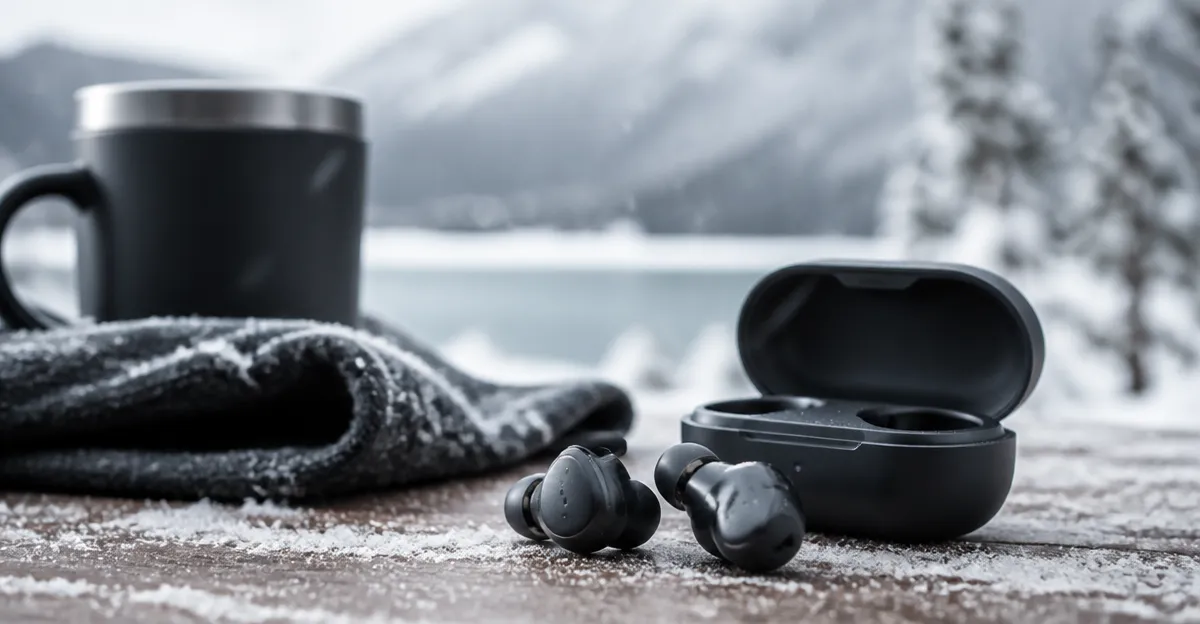
Introduction
Cold weather presents a unique set of challenges for wireless earbuds. When temperatures drop below freezing, users often notice reduced playback time, delayed touch controls, and a decline in active noise‑cancellation (ANC) effectiveness. This guide explains the scientific reasons behind those symptoms, offers practical strategies to mitigate them, and recommends earbuds that are engineered to perform well in chilly environments. Readers will leave with a clear understanding of how temperature influences battery chemistry, acoustic algorithms, and hardware design, as well as actionable steps to protect their devices during winter activities.
Background/Context
Lithium‑ion cells, the power source for virtually all modern earbuds, rely on chemical reactions that are temperature‑sensitive. At low temperatures the internal resistance of the cell increases, which reduces the voltage that can be delivered to the earbud’s circuitry. Simultaneously, the digital signal processors that drive ANC must operate within tight latency windows; colder silicon can slow processing speed, leading to a weaker anti‑noise signal. Understanding these fundamentals provides a foundation for evaluating product specifications and selecting accessories that help maintain performance when the thermometer falls.
How Cold Temperatures Reduce Battery Capacity
When an earbud is exposed to temperatures below 0 °C (32 °F), the electrolyte inside the lithium‑ion cell becomes more viscous. This heightened viscosity impedes ion flow, which in turn lowers the effective capacity of the battery. In practical terms, an earbud rated for eight hours of playback at room temperature may deliver only five to six hours in sub‑zero conditions. Moreover, the battery management system (BMS) often imposes a protective voltage cut‑off to prevent permanent damage, causing the device to shut down earlier than expected.
Manufacturers sometimes mitigate this issue by using higher‑energy density cells, adding thermal insulation to the charging case, or incorporating fast‑charge algorithms that compensate for slower chemistry. The Apple AirPods Pro 3 feature a USB‑C charging case with a built‑in temperature sensor that throttles charging speed when the case is cold, thereby preserving battery health over many seasons.
Users can also adopt simple habits: keep earbuds in a pocket close to body heat when not in use, avoid leaving them in a car overnight, and pre‑warm the charging case in the palm of a hand for a minute before inserting cold earbuds. These practices reduce the initial temperature shock and allow the battery to operate nearer to its optimal range.
Active Noise Cancellation Performance in Low Temperatures
ANC works by capturing ambient sound with outward‑facing microphones, generating an inverse waveform, and playing that anti‑noise through the drivers. The algorithm relies on rapid digital signal processing (DSP) and precise driver movement. Cold environments can affect both components. Microphone diaphragms become less responsive, and driver coils may contract, altering the acoustic impedance. As a result, the cancellation depth can drop by several decibels, making wind or cabin noise more audible.
Some earbuds incorporate adaptive ANC that continuously measures the acoustic environment and adjusts gain in real time. The Apple AirPods 4 use the H2 chip to maintain stable ANC performance down to 5 °C (41 °F), but they still experience a modest reduction in the lowest frequencies when the temperature falls further.
Design choices such as sealed driver chambers, low‑temperature‑rated MEMS microphones, and firmware that compensates for temperature‑induced latency can preserve ANC effectiveness. The JBL Vibe Beam employs a closed‑back architecture that naturally isolates external noise, reducing reliance on active processing and thereby delivering consistent performance even in winter conditions.
Materials and Design Considerations for Winter Use
Beyond battery and ANC, the physical construction of earbuds influences durability in cold weather. Plastics become brittle at low temperatures, and rubber ear tips can lose elasticity, leading to a looser fit. Premium models often use silicone blends that retain flexibility down to –20 °C (‑4 °F). The ZIUTY ANC Wireless Earbuds advertise an IPX7 waterproof rating and a lightweight, ultra‑flexible housing that remains supple in sub‑zero environments.
Another factor is the charging case. A case that insulates its internal battery and provides a warm micro‑environment can extend playback time by several minutes. The Soundcore P20i includes a compact case with a built‑in thermal pad that slows heat loss, making it a practical choice for hikers who need to keep earbuds warm between runs.
Finally, consider accessories such as insulated sleeves or pocket‑sized warming pouches. These add negligible bulk while creating a micro‑climate that protects both the battery and the acoustic membranes from rapid temperature fluctuations.
Product Recommendations for Cold Weather
When selecting earbuds for winter activities, prioritize the following criteria:
- Battery chemistry optimized for low temperatures (e.g., higher‑capacity cells, temperature‑aware BMS).
- ANC that remains effective at sub‑zero temperatures or a design that relies on passive isolation.
- Durable, flexible ear tip materials that maintain a secure seal.
- Charging case with insulation or active heating features.
Based on the data provided, the following products excel in one or more of these areas:
- Apple AirPods Pro 3 – Offers an advanced ANC system, heart‑rate sensing, and a USB‑C case that monitors temperature to protect the battery. Rated 4.5/5 from 13,023 reviews and priced at $189.99.
- Soundcore P20i – Provides 30 hours of total playback, a compact insulated case, and a budget‑friendly price of $19.99 while still delivering respectable ANC for casual use.
- Apple AirPods 4 – Features the H2 chip for stable ANC down to 5 °C, a lightweight design, and a price point of $99.00, making it a solid mid‑range option.
- JBL Vibe Beam – Relies heavily on passive isolation, includes an IP54 rating, and offers up to 32 hours of total battery life for $54.95.
- ZIUTY ANC Wireless Earbuds – Combines hybrid ANC with an IPX7 waterproof rating, a 40‑hour total battery life, and a touchscreen case for quick control, all for $16.99.
Comparison/Selection Guide
| Feature | Apple AirPods Pro 3 | Soundcore P20i | Apple AirPods 4 | JBL Vibe Beam | ZIUTY ANC |
|---|---|---|---|---|---|
| Price | $189.99 | $19.99 | $99.00 | $54.95 | $16.99 |
| Battery (Earbuds) | 8 h (ANC) | 10 h | 5 h | 8 h | 8 h |
| Total Playtime (Case) | 24 h | 30 h | 30 h | 32 h | 40 h |
| ANC Quality (Cold) | High (temperature‑aware) | Moderate | Stable to 5 °C | Passive isolation | Hybrid ANC, 40 dB reduction |
| Water Resistance | IPX4 (hearing aid mode) | IPX5 | IP54 | IP54 & IPX2 case | IPX7 |
| User Rating | 4.5/5 (13,023) | 4.4/5 (112,339) | 4.5/5 (33,090) | 4.2/5 (39,905) | 4.4/5 (450) |
Readers should match their primary use case with the table. For high‑intensity winter sports, the ZIUTY ANC’s IPX7 rating and robust battery life make it a top pick. For daily commuting in cold cities, the Apple AirPods Pro 3 provide the most refined ANC while protecting battery health through smart case management.
Best Practices & Tips
- Warm‑up before use: Hold the charging case in your hand for 30‑60 seconds before inserting cold earbuds. This raises the internal temperature enough to improve battery voltage.
- Store in insulated pockets: Use a thin neoprene sleeve inside a coat pocket to keep earbuds above freezing when not in use.
- Limit exposure to wind: High wind speeds increase the load on ANC microphones, causing the processor to work harder and drain battery faster.
- Enable low‑power mode: Many earbuds have a “Battery Saver” or “Transparency‑Only” mode that disables ANC when the battery falls below 20 % in cold conditions.
- Charge in a warm environment: Avoid charging the case in a car that is below 0 °C; the charger’s efficiency drops, extending charge time and potentially stressing the cells.
- Regular firmware updates: Manufacturers often release temperature‑compensation patches that improve ANC latency and battery reporting.
FAQ
- Why does my earbud battery die faster in the snow? Cold temperatures increase internal resistance, reducing the voltage that can be delivered and causing the BMS to cut power earlier.
- Can I use my earbuds while wearing gloves? Yes, but touch‑sensitive controls may not respond; most brands allow button‑press alternatives on the case.
- Do ANC earbuds generate more heat than non‑ANC models? The DSP for ANC consumes additional power, producing a small amount of heat that can actually help mitigate cold‑induced battery loss.
- Is there a risk of battery swelling in cold weather? Swelling is more common from over‑charging at high temperatures; cold weather typically slows chemical reactions, reducing swelling risk.
- Should I remove the earbuds from the case when it is very cold? Keep them inside the case as long as possible; the case acts as a thermal buffer and prevents rapid temperature changes.
- Do waterproof ratings affect cold‑weather performance? Waterproofing materials are usually silicone, which retains flexibility at low temperatures, so an IPX7 rating often indicates good cold‑weather durability.
- Can I use a power bank to keep my case warm? Yes, a low‑temperature‑rated power bank can supply heat while charging, but ensure the power output matches the case’s specifications.
Conclusion
Cold weather impacts earbud performance primarily through battery chemistry slowdown and reduced ANC efficiency. By understanding these mechanisms, selecting earbuds with temperature‑aware battery management, and applying simple protective habits, users can enjoy reliable audio even in sub‑zero conditions. The products highlighted in this guide—Apple AirPods Pro 3, Soundcore P20i, Apple AirPods 4, JBL Vibe Beam, and ZIUTY ANC Wireless Earbuds—represent a spectrum of price points and technical solutions that address the challenges of winter listening.
Products Featured in This Guide
Apple AirPods Pro 3
Price: $189.99 | Rating: 4.5/5 (13,023 reviews)
Featured for its temperature‑aware charging case, industry‑leading ANC, and health‑tracking sensors that remain functional in cold environments.
Soundcore P20i
Price: $19.99 | Rating: 4.4/5 (112,339 reviews)
Featured for its budget‑friendly price, 30‑hour total playtime, and insulated case that helps preserve battery life in low temperatures.
Apple AirPods 4
Price: $99.00 | Rating: 4.5/5 (33,090 reviews)
Featured for its H2 chip that maintains stable ANC performance down to 5 °C and its compact USB‑C case.
JBL Vibe Beam
Price: $54.95 | Rating: 4.2/5 (39,905 reviews)
Featured for its passive isolation design, IP54 rating, and long battery life that reduces reliance on active processing in cold weather.
ZIUTY ANC Wireless Earbuds
Price: $16.99 | Rating: 4.4/5 (450 reviews)
Featured for its hybrid ANC, IPX7 waterproof rating, and a smart touchscreen case that provides quick control without exposing the earbuds to the cold.
Frequently Asked Questions
How does cold weather affect the battery life of wireless earbuds?
Low temperatures increase lithium‑ion cell resistance, reducing voltage output and causing faster discharge, so playback time shortens.
Why does active noise‑cancellation (ANC) become less effective in the cold?
Colder silicon slows the digital signal processor, increasing latency and weakening the anti‑noise algorithm’s response.
What simple steps can I take to protect my earbuds’ battery in freezing conditions?
Keep them in a warm pocket when not in use, pre‑warm them before use, and avoid exposing them to extreme cold for extended periods.
Are there earbuds specifically designed to perform better in cold weather?
Yes, models with insulated housings, low‑temperature‑rated batteries, and robust DSPs (e.g., some sport‑oriented earbuds) handle cold more reliably.
How long can I safely use earbuds in sub‑freezing temperatures before performance degrades?
Performance typically starts to decline after 30‑60 minutes in temperatures below 0 °C, depending on the earbud’s design and battery capacity.