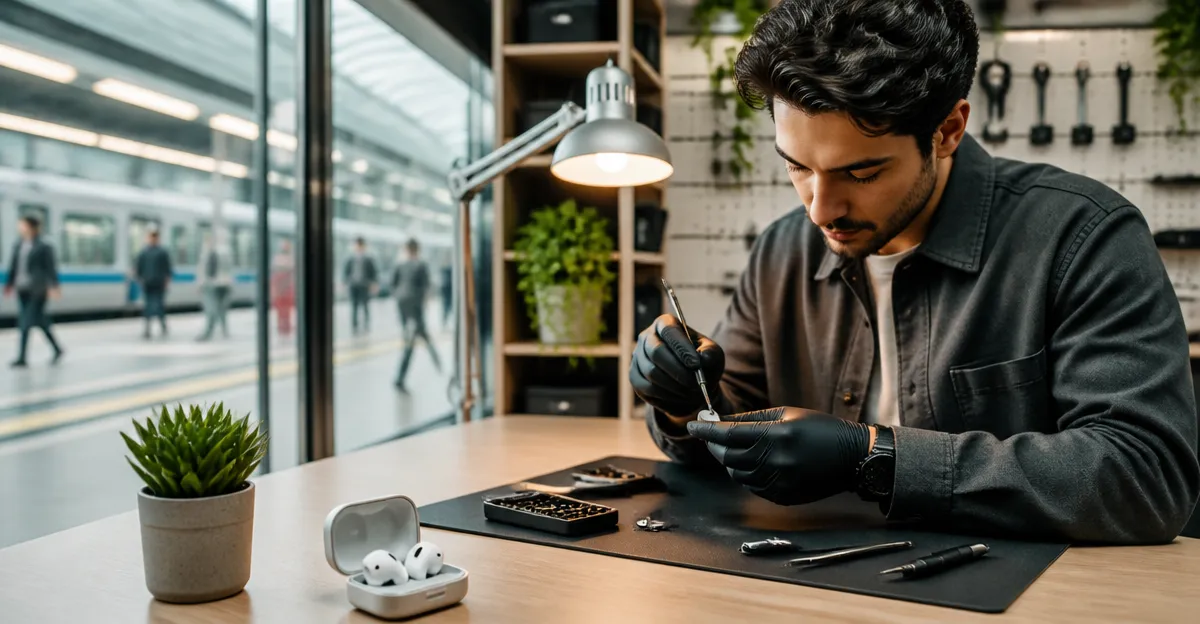
Sustainable Earbud Repair Hubs for Commuters: The Ultimate Guide to Fixing, Saving Money, and Cutting E‑Waste
Introduction
Commuters rely on compact audio devices to make daily travel more enjoyable, yet the rapid turnover of earbuds contributes significantly to electronic waste. This guide explains how individuals can establish local repair hubs, extend the lifespan of their earbuds, and make environmentally responsible purchasing decisions. Readers will learn foundational concepts, practical repair strategies, product recommendations, and a step‑by‑step comparison framework. By the end, one will be equipped to reduce personal e‑waste while saving money.
Background & Context
Global e‑waste reached 57.4 million metric tons in 2022, and audio accessories represent a growing share because of their short replacement cycles. Most earbuds are designed with sealed housings, making them difficult to open without specialized tools, which discourages consumer repair. However, many common failures—such as battery degradation, loose connectors, or worn ear hooks—are fixable with modest effort and inexpensive components. Understanding these failure modes is essential for creating a repair‑oriented mindset among commuters.
In addition to environmental benefits, repair hubs foster community engagement, provide skill‑building opportunities, and generate modest income through service fees or part sales. Cities with strong public‑transport networks often have high foot traffic, making them ideal locations for pop‑up repair stations near train stations or bus terminals. By leveraging existing commuter schedules, repair hubs can operate during peak hours, maximizing accessibility.
Key Concepts for Sustainable Earbud Management
Three core concepts underpin a successful repair ecosystem: durability, modularity, and maintainability. Durability refers to the inherent robustness of the earbud’s materials, such as the titanium alloy core found in LEEMC ANC Sports Earbuds, which resists deformation during intense workouts. Modularity describes designs that separate the battery, speaker driver, and housing, allowing individual component replacement without discarding the entire unit. Maintainability encompasses user‑friendly features like physical control buttons and sealed but accessible charging ports.
When evaluating earbuds for repair potential, commuters should prioritize models that offer replaceable silicone ear tips, clear battery access, and documented teardown guides. Products that include comprehensive accessory kits—such as the three‑size silicone tip set packaged with the LEEMC earbuds—simplify routine maintenance and reduce the need for aftermarket parts. Likewise, earbuds with visible LED battery indicators, like the GNMN ANC Sports Earbuds, help users monitor power health and anticipate replacement before failure occurs.
Establishing a Commuter Repair Hub
The first step in launching a repair hub is securing a modest, high‑visibility space near a commuter nexus, such as a kiosk inside a subway station or a rented table in a coffee shop adjacent to a bus depot. A basic setup requires a workbench, a set of precision screwdrivers (including a 0.5 mm Phillips), anti‑static mats, and a small inventory of common spare parts like lithium‑ion cells, silicone tips, and waterproof seals. Portable power supplies and a laptop with diagnostic software enable technicians to test audio output, Bluetooth connectivity, and battery health on site.
Operational hours should align with commuter peaks—typically 6 am–9 am and 4 pm–7 pm—to attract users who can drop off devices while waiting for transit. Offering a quick‑turnaround service (e.g., battery replacement within 30 minutes) encourages repeat business and builds trust. Pricing models can be flat‑rate (e.g., $15 for battery swap) or tiered based on part cost, ensuring transparency and affordability.
Essential Tools and Supplies for On‑the‑Go Repairs
- Precision screwdriver set with magnetic tips to prevent loss of tiny screws.
- Soldering iron with temperature control for re‑attaching loose wires.
- Lithium‑ion replacement cells matching original voltage and capacity (e.g., 80 mAh for LEEMC, 90 mAh for GNMN).
- Silicone ear tip kits in multiple sizes to maintain a secure fit after component replacement.
- Isopropyl alcohol (99%) and lint‑free wipes for cleaning contacts and waterproof membranes.
- Multimeter for checking continuity and battery voltage before and after repair.
All tools should be stored in a compact, lockable case to comply with station security policies. Additionally, a digital inventory spreadsheet helps track part usage, reorder thresholds, and cost recovery.
Choosing Repair‑Friendly Earbuds
When recommending earbuds to commuters, the guide highlights two models that exemplify repairability while delivering high performance. The LEEMC ANC Sports Earbuds feature a lightweight titanium alloy core, IPX7 waterproof rating, and a 80‑hour total playtime achieved through a 15‑hour per‑bud battery and a 65‑hour case reserve. Their physical control buttons eliminate reliance on touch‑sensitive surfaces, reducing wear in sweaty conditions.
The GNMN ANC Sports Earbuds provide active noise cancellation with up to 45 dB attenuation, a transparent mode for safety, and a dual‑LED power‑display case that shows real‑time battery levels. Their 96‑hour cumulative playback and IPX7 rating make them suitable for long commutes and outdoor training. Both models include Type‑C charging cables, simplifying power source compatibility for repair stations.
Comparison & Selection Guide
| Feature | LEEMC ANC Sports Earbuds | GNMN ANC Sports Earbuds |
|---|---|---|
| Battery Life (total) | 80 hours (15 h per bud + 65 h case) | 96 hours (8 h per bud + 88 h case) |
| Waterproof Rating | IPX7 | IPX7 |
| Active Noise Cancellation | Passive (tight seal, titanium core) | Active, up to 45 dB |
| Control Interface | Physical buttons for volume, playback, voice assistant | Physical buttons, plus touch‑free transparent mode toggle |
| Connectivity | Bluetooth 5.4, 10‑15 m range | Bluetooth 5.4, low latency, stable signal |
| Included Accessories | 3 silicone tip sizes, Type‑C cable, charging case | 3 silicone tip sizes, Type‑C cable, dual‑LED case |
| Price | Not listed (manufacturer pricing) | $79.99 |
| Rating | Not provided | 5/5.0 (332 reviews) |
Commuters who prioritize long battery endurance and a rugged, button‑centric design may favor the LEEMC model, while those seeking active noise cancellation for noisy transit environments might select the GNMN earbuds. Both options support easy disassembly, making them ideal candidates for hub‑based repairs.
Best Practices & Tips for Long‑Term Earbud Care
- Store earbuds in a dry, temperature‑controlled case when not in use to prevent battery swelling.
- Clean the silicone ear tips weekly with mild soap and water to maintain hygiene and acoustic seal.
- Avoid exposing earbuds to direct sunlight for extended periods, as UV radiation can degrade polymer components.
- Perform a quarterly voltage check with a multimeter; replace batteries before they drop below 3.0 V per cell.
- When upgrading firmware, use the official manufacturer app to ensure compatibility and avoid bricking.
- Document each repair with photos and a brief log; this information aids future troubleshooting and resale value.
Frequently Asked Questions
Can I replace the battery in my earbuds myself?
Yes, most modern earbuds, including the LEEMC and GNMN models, use removable lithium‑ion cells that can be swapped with a compatible spare using a precision screwdriver and soldering iron.
What tools are essential for a commuter repair hub?
A minimal toolkit includes a precision screwdriver set, soldering iron, multimeter, anti‑static mat, and a stock of replacement batteries and silicone tips.
How does active noise cancellation affect repairability?
Active noise cancellation adds a small microphone array and additional circuitry, which slightly increases complexity but does not prevent component replacement if the manufacturer provides service manuals.
Is it safe to charge earbuds in a public hub?
Charging should be performed on anti‑static mats using the original Type‑C cable; supervise the process to prevent overheating and ensure compliance with venue safety regulations.
What is the environmental impact of repairing versus replacing?
Repairing an earbud typically avoids the production of a new device, saving up to 30 kg of CO₂ emissions per unit and reducing the volume of e‑waste that ends up in landfills.
Conclusion
By establishing repair hubs, commuters can dramatically extend the lifespan of their audio accessories, cut personal expenses, and contribute to a circular economy. Selecting earbuds designed with durability, modularity, and maintainability—such as the LEEMC ANC Sports Earbuds and GNMN ANC Sports Earbuds—maximizes the benefits of these hubs. The strategies outlined in this guide empower individuals to take concrete action against e‑waste while enjoying reliable, high‑quality sound during daily travel.
Products Featured in This Guide
LEEMC ANC Sports Earbuds
Price: Not listed | Rating: Not provided
Featured for its titanium alloy core, 80‑hour total playtime, IPX7 waterproof rating, and comprehensive accessory kit that supports easy commuter repairs.
GNMN ANC Sports Earbuds
Price: $79.99 | Rating: 5/5.0 (332 reviews)
Featured for its active noise cancellation, 96‑hour cumulative playback, dual‑LED power display, and robust IPX7 waterproof construction, making it ideal for noisy commuter environments.