Ultimate Guide: How ANC (Active Noise Cancellation) Affects Voice Assistant Accuracy in Earbuds
Introduction
The modern user expects seamless interaction with voice assistants while exercising, commuting, or working in bustling environments. This guide explains how active noise cancellation (ANC) technology influences the ability of earbuds to capture voice commands accurately. Readers will learn the underlying principles of ANC, the acoustic challenges it creates, and how specific product features mitigate those challenges. By the end of the article, one will be equipped to select earbuds that balance noise reduction with reliable voice assistant performance.
Background and Context
Active noise cancellation is a digital signal processing technique that generates an inverse sound wave to neutralize ambient noise. Unlike passive isolation, which relies on physical barriers, ANC continuously monitors external sound through dedicated microphones and injects anti‑phase audio to cancel it. While ANC excels at reducing low‑frequency rumble, it can also interfere with the earbud’s own microphones that capture the user’s voice. Understanding the interaction between ANC microphones and voice‑capture microphones is essential for evaluating product suitability.
Voice assistants such as Siri, Google Assistant, and Alexa depend on clear, undistorted speech input. The speech‑to‑text engine analyzes frequency patterns, amplitude, and timing to interpret commands. When ANC processing inadvertently suppresses or distorts the user’s voice, recognition accuracy declines, leading to repeated attempts or incorrect actions. Manufacturers therefore design earbuds with dedicated “speech‑enhancement” algorithms, dual‑microphone arrays, and adaptive ANC levels to preserve voice fidelity.
How ANC Works and Its Impact on Voice Recognition
ANC systems typically employ three microphone groups: external microphones to sample ambient noise, internal microphones to monitor the sound inside the ear canal, and a dedicated voice microphone that focuses on the speaker’s speech. The external microphones feed the ANC processor, which calculates an anti‑noise signal. Simultaneously, the voice microphone captures the user’s utterance, often applying a separate beam‑forming algorithm to isolate speech from background sounds.
When the ANC algorithm aggressively cancels low‑frequency noise, it may also attenuate portions of the user’s voice that share similar frequency components. This phenomenon, known as “speech leakage,” reduces the signal‑to‑noise ratio (SNR) at the voice microphone. To counteract leakage, many premium earbuds incorporate adaptive ANC that reduces cancellation intensity when speech is detected, thereby preserving intelligibility.
Furthermore, the placement of microphones relative to the ear canal influences how much of the user’s voice is captured before ANC processing. Earbuds with outward‑facing microphones tend to pick up more ambient chatter, whereas inward‑facing microphones benefit from the acoustic seal created by the ear tip, delivering a cleaner speech signal.
Factors Influencing Voice Assistant Accuracy with ANC
- Microphone Count and Placement: Multiple microphones enable beam‑forming and noise‑suppression techniques that isolate speech. Inward‑facing microphones benefit from the ear’s natural acoustic barrier.
- Adaptive ANC Levels: Systems that automatically lower cancellation during voice input maintain higher SNR for the speech microphone.
- Speech‑Enhancement Algorithms: Proprietary software that amplifies vocal frequencies (typically 300 Hz–3 kHz) improves recognition accuracy.
- Fit and Seal: A secure fit prevents external noise from leaking into the ear canal, reducing the workload on ANC and preserving voice clarity.
- Battery Management: ANC draws significant power; when battery levels are low, some devices reduce ANC intensity, which can indirectly affect voice capture.
Evaluating these factors helps users identify earbuds that deliver both quiet environments and reliable voice command execution.
Product Recommendations for Optimal ANC Performance
Among the available options, two Soundcore models demonstrate distinct approaches to balancing ANC and voice assistant accuracy.
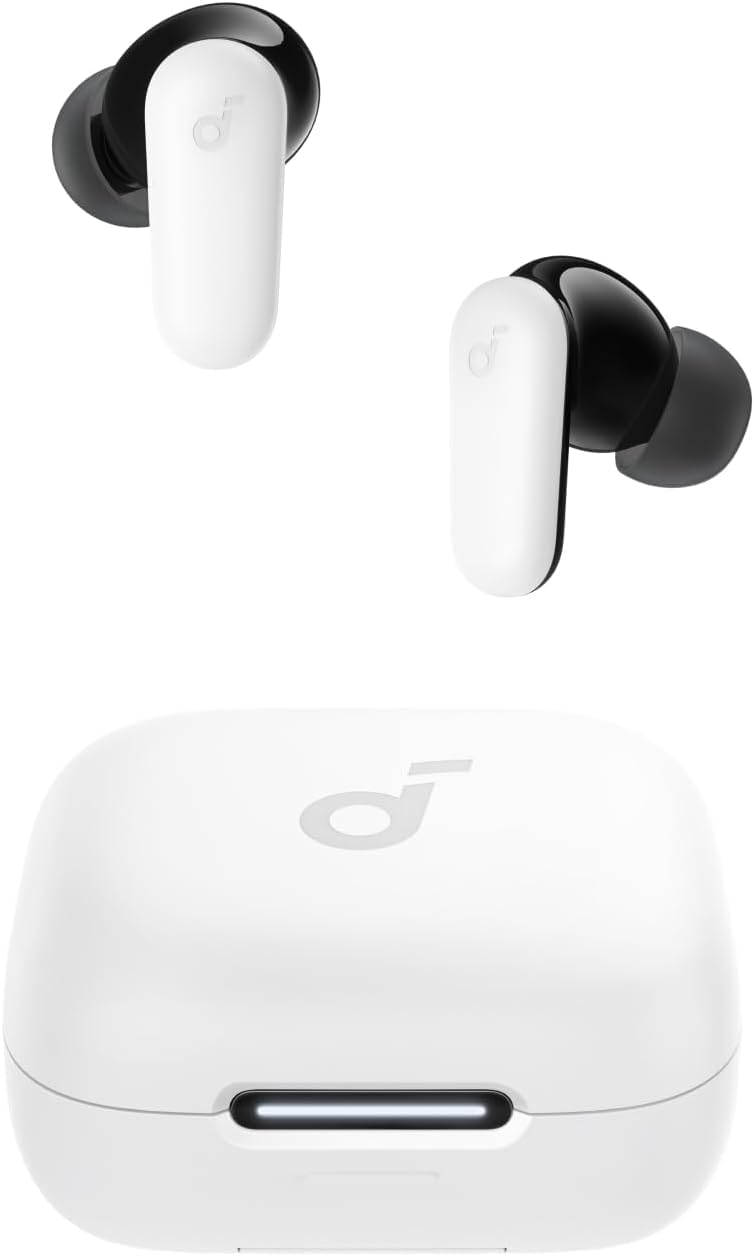
The first recommendation is the Soundcore P30i. Priced at $29.98, this model offers strong and smart ANC that reduces noise by up to 42 dB, while incorporating a dedicated 4‑mic AI‑enhanced call system. The presence of multiple microphones enables effective beam‑forming, which isolates the user’s voice from background sounds. Additionally, the P30i features a transparency mode that temporarily disables ANC, allowing the user to verify that commands are being heard correctly before issuing them.
Key specifications of the Soundcore P30i include:
- Bluetooth 5.4 for stable, low‑latency connections
- 10 mm dynamic drivers with BassUp technology for rich audio playback
- 45 hours total playtime with the charging case, ensuring consistent ANC performance throughout the day
- Rating of 4.4 out of 5 based on 35,118 reviews, indicating broad user satisfaction with voice call quality
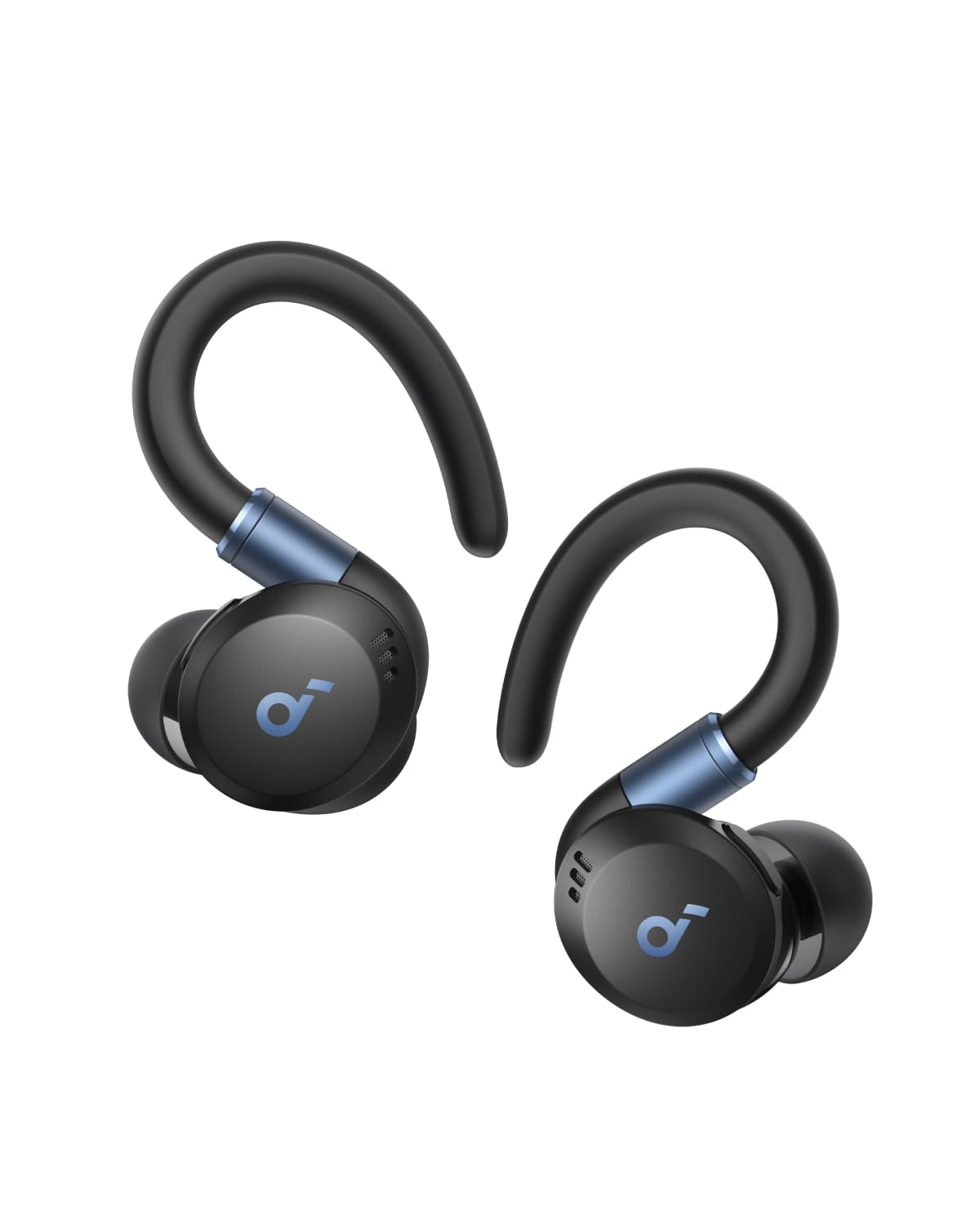
The second recommendation is the Soundcore Sport X20. Although primarily marketed as a workout earbud, the X20 incorporates adaptive ANC and a flexible ear‑hook design that ensures a tight seal, both of which contribute to clearer voice transmission during high‑intensity activities. Priced at $79.99, it provides 48 hours of playback and an IP68 rating for water and dust resistance, making it suitable for outdoor environments where background noise is prevalent.
Key specifications of the Soundcore Sport X20 include:
- Rotatable and extendable ear hooks that allow up to 30° rotation and 4 mm extension for a customized fit
- 11 mm dynamic drivers with BassUp technology for powerful low‑frequency response
- Adaptive ANC that can be manually adjusted to balance noise reduction with speech clarity
- Rating of 4.2 out of 5 based on 13,905 reviews, highlighting reliability in active settings
Both earbuds provide distinct advantages: the P30i excels in everyday commuting and office scenarios with its AI‑enhanced microphones, while the Sport X20 offers superior fit and durability for gym‑related voice interactions.
Comparison and Selection Guide
| Feature | Soundcore P30i | Soundcore Sport X20 |
|---|---|---|
| Price | $29.98 | $79.99 |
| ANC Level | Up to 42 dB, adaptive | Adjustable, rotatable hooks for seal |
| Microphone Count | 4 microphones with AI‑enhanced calls | 2 microphones with adaptive ANC |
| Battery Life (ANC on) | 6 hours per charge, 25 hours with case | 48 hours total (ANC off), unspecified with ANC |
| Water Resistance | IP54 | IP68 |
| Rating | 4.4/5 (35,118 reviews) | 4.2/5 (13,905 reviews) |
When selecting an earbud for voice assistant reliability, consider the environment in which the device will be used. For office or commuter scenarios, the P30i’s extensive microphone array and AI‑driven speech enhancement provide superior command recognition. For outdoor workouts or rainy conditions, the Sport X20’s secure fit and higher IP rating ensure that the microphone remains positioned correctly, reducing wind‑induced distortion.
Best Practices & Tips
- Enable transparency mode before issuing a command to verify that the microphone is not obstructed by excessive ANC.
- Maintain a snug seal; loose ear tips allow ambient noise to bypass ANC and interfere with speech detection.
- Update firmware regularly; manufacturers often release algorithm improvements that enhance speech‑enhancement capabilities.
- Position the voice microphone away from the ear hook or any reflective surface that could cause echo artifacts.
- When battery levels drop below 20 %, consider reducing ANC intensity to preserve voice capture quality.
Applying these practices maximizes the probability that voice assistants will interpret commands correctly, regardless of the surrounding noise level.
Frequently Asked Questions
1. Does turning ANC off improve voice assistant accuracy?
Disabling ANC eliminates the risk of speech leakage, but it also exposes the microphone to ambient noise. In quiet environments, turning ANC off can marginally improve accuracy; however, in noisy settings, adaptive ANC that lowers cancellation during speech typically yields better results.
2. How many microphones are needed for reliable voice recognition?
While there is no strict minimum, a dual‑mic configuration enables basic beam‑forming, and a four‑mic array provides advanced AI‑driven noise suppression. The Soundcore P30i’s four‑mic system exemplifies this advantage.
3. Can ear tips affect voice command performance?
Yes. Ear tips that create a tight acoustic seal reduce external noise intrusion, allowing the microphone to capture a cleaner speech signal. The rotatable hooks of the Sport X20 assist in achieving this seal.
4. Does Bluetooth version impact ANC and voice assistant latency?
Newer Bluetooth versions, such as 5.4 used in the P30i, offer lower latency and more stable connections, which can reduce the delay between speaking and command processing, especially when ANC is active.
5. Are there any health concerns with prolonged ANC use?
ANC emits low‑level anti‑phase sound waves that are inaudible to most users. Research indicates no adverse health effects when used at recommended volume levels. Nevertheless, users should take periodic breaks to avoid ear fatigue.
Conclusion
Active noise cancellation profoundly influences voice assistant accuracy by altering the acoustic environment surrounding the earbud’s microphones. Understanding the balance between noise reduction and speech preservation enables users to select earbuds that deliver both quiet immersion and reliable command recognition. By considering microphone architecture, adaptive ANC behavior, fit, and battery management, one can make an informed purchase that aligns with personal usage patterns. The Soundcore P30i and Soundcore Sport X20 illustrate two viable approaches, each optimized for distinct scenarios.
Products Featured in This Guide
Soundcore P30i
Price: $29.98
Rating: 4.4/5 (35,118 reviews)
Featured for its strong and smart ANC, four‑mic AI‑enhanced call system, and long battery life that together support accurate voice assistant interaction.
Soundcore Sport X20
Price: $79.99
Rating: 4.2/5 (13,905 reviews)
Featured for its flexible ear‑hook design, adaptive ANC, and IP68 waterproof rating, making it ideal for active users who require reliable voice command performance during workouts.